
Toy Car: Traffic Jam
MFT ENTERTAINMENT LIMITEDPuzzle
4.9222.00 Reviews
- Version
- 1.0.18
- Installs
- 500.00K
- Age Rating
- Everyone
Screenshots
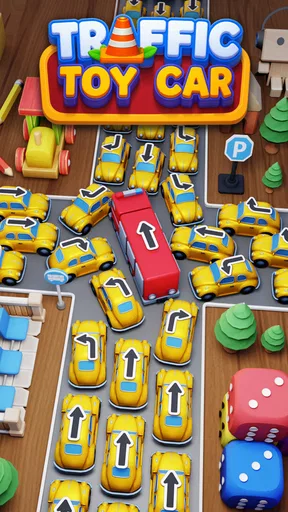
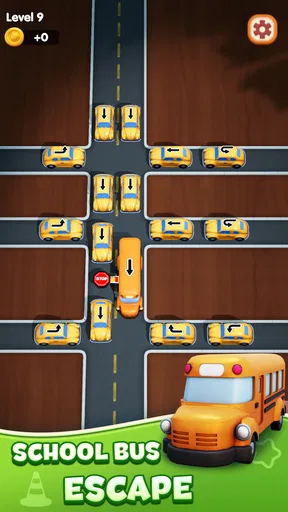
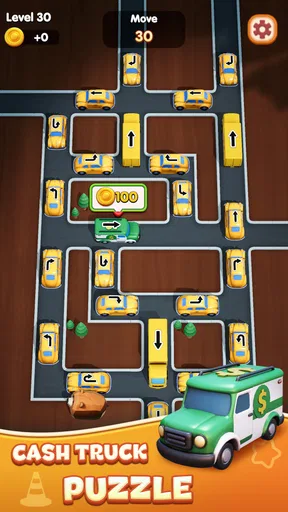
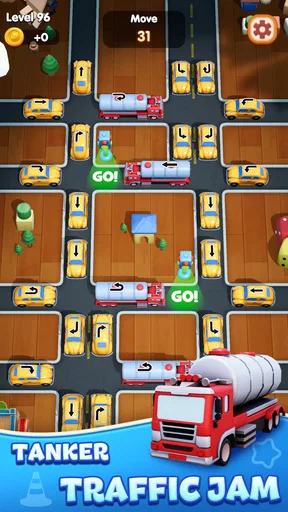
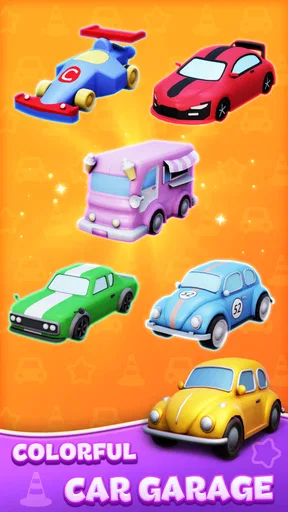
Our Review of Toy Car: Traffic Jam
 Analysis by Appyee
I went into Toy Car: Traffic Jam expecting a simple way to pass a few quiet minutes, and that is exactly where this puzzle game makes the best impression. The idea is immediately readable: a group of toy cars is stuck, and I need to clear the jam by making sensible moves. It is a free game from MFT ENTERTAINMENT LIMITED, aimed at Everyone, and its traffic-themed puzzles are much easier to understand than many puzzle games that bury the basic rule under menus and tutorials.
That simplicity is useful for a first-time player. I do not need to learn a complicated story, memorize characters, or build a team before I can play. The focus stays on looking at the blocked cars, identifying what is preventing movement, and choosing an order that gradually opens the board. In my experience, the most satisfying moments come when one apparently small move creates enough space for several cars to escape.
The game has a 4.9 average from around 14 thousand ratings and has passed 500 thousand installs, which suggests that its straightforward format has found a receptive audience. I would still treat those figures as a sign of popularity rather than a guarantee that every player will enjoy it. People who want a fast, low-pressure puzzle are likely to feel comfortable here, while players looking for a deep strategy game may find the toy-car presentation and compact problem solving too light.
What the first few minutes feel like
The opening experience is built around recognition rather than explanation. You see a traffic jam made from toy vehicles, and the goal is to make the situation less crowded. That visual setup does most of the teaching. Instead of asking me to study a long rules screen, it encourages the natural question: which car can move first, and where can it go?
For a new player, I recommend resisting the urge to move the most visible car immediately. Take a brief look at the entire arrangement first. A vehicle near the edge may appear to be the obvious choice, but another car can be the real obstruction. This small pause turns the game from random tapping into a proper puzzle routine: scan, identify a dependency, make one move, then scan again.
The toy theme also makes the game feel less severe than a traditional logic board. When I make a poor choice, the mistake feels like a temporary traffic problem rather than a major failure. That matters during short sessions, especially when I am playing while waiting for an appointment or taking a break from work. The game is easy to pick up without demanding a large block of attention.
It is worth setting expectations about the style. This is not a racing game, despite the vehicles. The cars are puzzle pieces, and the appeal comes from arranging their movement rather than controlling speed or competing on a track. Anyone installing it for driving action may be surprised, while fans of traffic-jam puzzles should understand the concept quickly.
Starting without overthinking the interface
On a first launch, I would focus on the play area and treat the surrounding interface as secondary. The important information is the position of the cars and the available routes. If a button, prompt, or reward appears between puzzles, I would read it once before tapping, particularly if it leads toward an optional purchase. The game is free to download, but individual in-app purchases range from $0.99 to $99.99, so a careful first setup is sensible.
That does not make the game unsuitable for casual players. It simply means I would enable the device’s normal purchase safeguards before handing the phone to a child, even though the content rating is Everyone. The age rating describes the game’s general suitability; it does not remove the need for sensible control over spending.
The current version is 1.0.18, and the minimum requirement is Android 8.0. For someone using an older phone, checking compatibility before getting invested is practical. On a supported device, the game’s basic concept should be approachable from the start because it does not rely on specialist puzzle vocabulary.
How I approach the first meaningful success
My preferred opening method is to locate the car with the clearest route, then ask what its movement will unlock. I do not judge a move only by whether one car leaves the immediate area. A stronger move is often the one that creates room for another vehicle, even if it does not look dramatic at first.
Once a car has moved, I pause instead of rapidly repeating taps. The board may look almost unchanged, but the relationships between the vehicles have shifted. That pause helps me notice newly available paths and prevents a chain of impulsive moves from making the jam harder to read. For a first-time player, this is the most useful habit I can suggest: treat every move as information, not just progress.
When I get stuck, I mentally reverse the problem. Rather than asking which car should move next, I ask which car needs to move eventually and what is currently blocking it. Then I work backward to find the first obstruction I can remove. This approach is more reliable than selecting whichever vehicle is closest to an open-looking space.
There is also a practical benefit to using slower, deliberate moves. Traffic puzzles often tempt players to chase an immediate opening, but an opening is not always a solution. A narrow route may be useful for one car and still leave another vehicle trapped behind it. Looking at the board as a sequence of dependencies gives the game more depth than its cheerful presentation initially suggests.
Confusion that can make an easy board feel difficult
The most common misunderstanding is assuming that the visible exit or open area should determine the first move. In a crowded arrangement, the correct starting point may be a car that seems unrelated to the route you care about. Its purpose is to create the space needed for a later move.
Another source of confusion is reading the puzzle one car at a time. I find it more helpful to group the vehicles mentally: which ones are directly blocked, which ones are blocking others, and which ones already have some freedom? This simple classification reveals the structure of the jam. It also helps explain why a move that looks unproductive can be valuable.
If a puzzle feels stalled, I would not immediately assume that the game is asking for a special trick. First, review the board from the beginning and identify the earliest move that changed the available space. Often the problem is not a hidden mechanic but a missed dependency. If the game offers assistance during a difficult moment, I would use it selectively rather than automatically, because solving the blockage myself is where much of the satisfaction comes from.
Players should also avoid confusing speed with skill. There is no reason to rush a traffic puzzle simply because each move is easy to perform. A quick tap can send attention in the wrong direction, while a short visual scan can reveal a much cleaner route. I especially notice this difference when playing on a small phone screen, where crowded vehicles can be harder to compare at a glance.
A realistic everyday way to play
Imagine that I have ten minutes before a train arrives. I want something more engaging than scrolling, but I do not want to begin a role-playing game that expects a long session. This is where the game fits naturally. I can open it, study one jam, make a few deliberate decisions, and stop after a meaningful result instead of needing to remember a complicated plot or manage several systems.
It also works for a short mental reset after repetitive work. The puzzles ask me to change perspective, but the toy-car theme keeps the mood relaxed. I would not choose it when I need intense competition or a strong social feature; I would choose it when I want a contained problem with a visible before-and-after result.
For children, the Everyone rating and clear visual premise make it approachable, but I would still play alongside a younger user at first. The puzzle itself may be suitable, while purchase prompts and the temptation to seek help are separate matters. Showing a child how to inspect the whole board before moving is more useful than simply telling them to tap the cars that look free.
Where it stands beside other puzzle choices
Compared with match-three games, this one depends less on spotting color combinations and more on planning movement order. A match-three board usually rewards quick recognition and the creation of chains; a traffic jam puzzle rewards restraint and spatial reasoning. If I enjoy making a board react in bursts, another puzzle style may feel more energetic. If I prefer untangling a fixed arrangement, the car-jam format is a better match.
Compared with classic sliding-block puzzles, the toy vehicles make the situation friendlier and easier to approach. The familiar traffic image gives the objective context, whereas a purely abstract block puzzle can feel more mechanical. On the other hand, players who want a rigorous, minimalist logic challenge may prefer an abstract alternative with fewer visual distractions.
It also differs from endless casual games because the central satisfaction comes from finishing a specific arrangement rather than maintaining a running score or surviving an accelerating challenge. That makes it a good choice for controlled breaks, but perhaps less appealing for someone who wants constant novelty or pressure. I would skip it if my main requirement is online competition, racing controls, or a narrative campaign.
How to get more from each puzzle
One useful technique is to preserve flexible space. If a move opens a large area, I do not automatically fill it with the first available car. Keeping that space available can give several vehicles room to move later. This is a small but important trade-off: immediate progress may be less valuable than maintaining options.
I also pay attention to irreversible-looking choices. Before moving a car into a narrow area, I ask whether it will block another vehicle or reduce the number of routes I can inspect. Even when the game lets me recover, avoiding unnecessary complications makes the puzzle easier to understand and reduces frustration.
A third technique is to separate observation from execution. I first decide on a short sequence in my head, then carry it out one move at a time. I do not plan the entire solution if the board is crowded; I plan only until the next major opening. This balances foresight with flexibility and works especially well when one move changes the arrangement enough to reveal new possibilities.
For players who use the game as a focus exercise, I would keep the sessions intentional. Instead of opening it whenever I feel bored, choose one puzzle, solve it carefully, and stop when attention starts to fade. The format supports that approach because the goal is concrete. It is less effective if you are looking for a background activity that can run without thought.
What may affect your decision to keep playing
The biggest limitation is also the game’s defining strength: the concept stays narrow. Clearing toy-car jams is easy to understand, but players who need varied mechanics may eventually want something broader. The simple presentation can feel repetitive if the basic movement puzzle is not already appealing to you.
The free entry point is convenient, yet the wide in-app purchase range means I would pay attention to the purchase flow rather than assume every useful option is included at no cost. I would begin without spending anything and decide whether the core puzzles hold my attention first. There is no reason to buy extras before knowing whether the game fits my habits.
The game is also not the right choice for someone who dislikes trial, error, or visual planning. Even a relaxing puzzle can become irritating when a player wants every action to produce immediate progress. In that case, a word game, a match-three title, or a more guided casual game may be a better alternative.
On the positive side, the low barrier to entry is genuine. The release date was September 27, 2025, and the current version is 1.0.18, so the product is still presented as a relatively focused experience rather than a sprawling platform. I like that the central idea remains easy to explain to a friend: clear the jam by thinking about order and space.
My recommendation for a first-time player
I would recommend starting with the free version, checking the purchase controls on the device, and giving the first puzzles your full attention instead of rushing through them. Look at every vehicle before touching the screen, identify the car that is creating the most important blockage, and use each move to open the next layer of the board.
After a few successful clears, decide whether the game’s rhythm suits you. If you enjoy compact spatial problems and relaxing toy visuals, it can become a dependable choice for short breaks. If you are waiting for racing, competition, a story, or a constantly changing set of mechanics, it is better to choose another category rather than expecting this puzzle format to transform into something else.
My final impression is favorable because the game understands its own appeal. It does not need a complicated premise to make a traffic jam interesting. The best sessions leave me feeling that I solved a small, tidy problem rather than merely passed time. Toy Car: Traffic Jam is at its best when you want calm, readable puzzle decisions with just enough planning to make every cleared route feel earned.
Verdict
Strengths of Toy Car: Traffic Jam
- Simple controls make it easy for younger players to start quickly.
- Short levels are convenient for quick gaming sessions.
- Bright toy-like visuals create a cheerful, family-friendly atmosphere.
- Puzzle gameplay encourages planning and careful observation.
- Playable offline, so no constant internet connection is needed.
Limitations of Toy Car: Traffic Jam
- Some puzzles may feel repetitive after extended play.
- Difficulty progression can be uneven between levels.
- Ads may interrupt gameplay, depending on the device version.
- Limited customization reduces long-term appeal for some players.
- The toy-car theme may feel too simple for older gamers.
Similar Picks in This Category
View All
Block Blast!
HungryStudio4.8

Braindom: Brain Games Test
Lahana Game Studio4.6

AMAZE!
CrazyLabs LTD4.6

Sudoku - Classic Sudoku Puzzle
Oakever Games4.7

Art Puzzle - Puzzle Games
Easybrain4.8

Amaze GO!
Oakever Games4.9
Frequently Asked Questions
What is Toy Car: Traffic Jam?
Toy Car: Traffic Jam is a casual puzzle game centered on organizing miniature vehicles in crowded traffic situations. The main challenge is to move cars in the correct order, clear blocked paths, and help vehicles reach their destinations without creating new obstacles. Its toy-like presentation makes the game approachable, while progressively more complicated layouts require planning, patience, and careful timing.
How do you play Toy Car: Traffic Jam?
Gameplay is based on examining the traffic arrangement and selecting cars that can move safely. You generally need to identify which vehicle is blocking others, make space on the road, and complete the level using logical moves rather than random tapping. Early stages work as a tutorial, but later puzzles introduce tighter spaces and more demanding arrangements, so thinking several moves ahead becomes increasingly important.
Is Toy Car: Traffic Jam free to download and play?
Toy Car: Traffic Jam can generally be downloaded for free on supported mobile devices, although the exact availability may depend on your Android or iOS region. As with many free casual games, optional advertisements or in-app purchases may be included. It is worth checking the store listing before installing if you want to confirm current pricing, available purchases, and whether any features require payment.
Does Toy Car: Traffic Jam work offline?
The basic puzzle experience may be playable without a constant internet connection, which makes Toy Car: Traffic Jam suitable for short sessions while traveling or when mobile data is unavailable. However, advertising, updates, cloud-related functions, or other connected features may require internet access. For the most reliable experience, launch the game online at least once and check its behavior after switching to airplane mode.
Is Toy Car: Traffic Jam suitable for children and casual players?
Toy Car: Traffic Jam is designed to be easy to understand, with simple controls and colorful miniature-car visuals that can appeal to children and casual players. Nevertheless, some puzzles may become surprisingly challenging and require concentration. Parents should also review the app-store age rating, advertising options, and in-app purchase settings before allowing younger children to play without supervision.
Play our best games!


